What is Back Pain?
Back pain is pain anywhere along your spine — from the base of your neck down to your tailbone. Most people put it in three buckets, and where it sits tells me a lot about what’s driving it.
Lower back pain (lumbar) is the most common. It’s the deep ache after a long drive on the 101, the catch when you bend to load the dishwasher, the stiffness that won’t let you stand up straight after sitting all morning. The lumbar spine carries most of your body weight and does most of your bending and twisting, so it takes the most load — and shows wear the soonest.
Mid back pain (thoracic) sits between your shoulder blades. It’s the burning or tight band that shows up by mid-afternoon at a desk, often tied to a rounded upper back and shoulders that have crept forward over years.
Upper back and base-of-neck pain (cervicothoracic) is the knot where your neck meets your shoulders. It’s usually a posture and load problem — your head drifting forward over a screen, hour after hour.
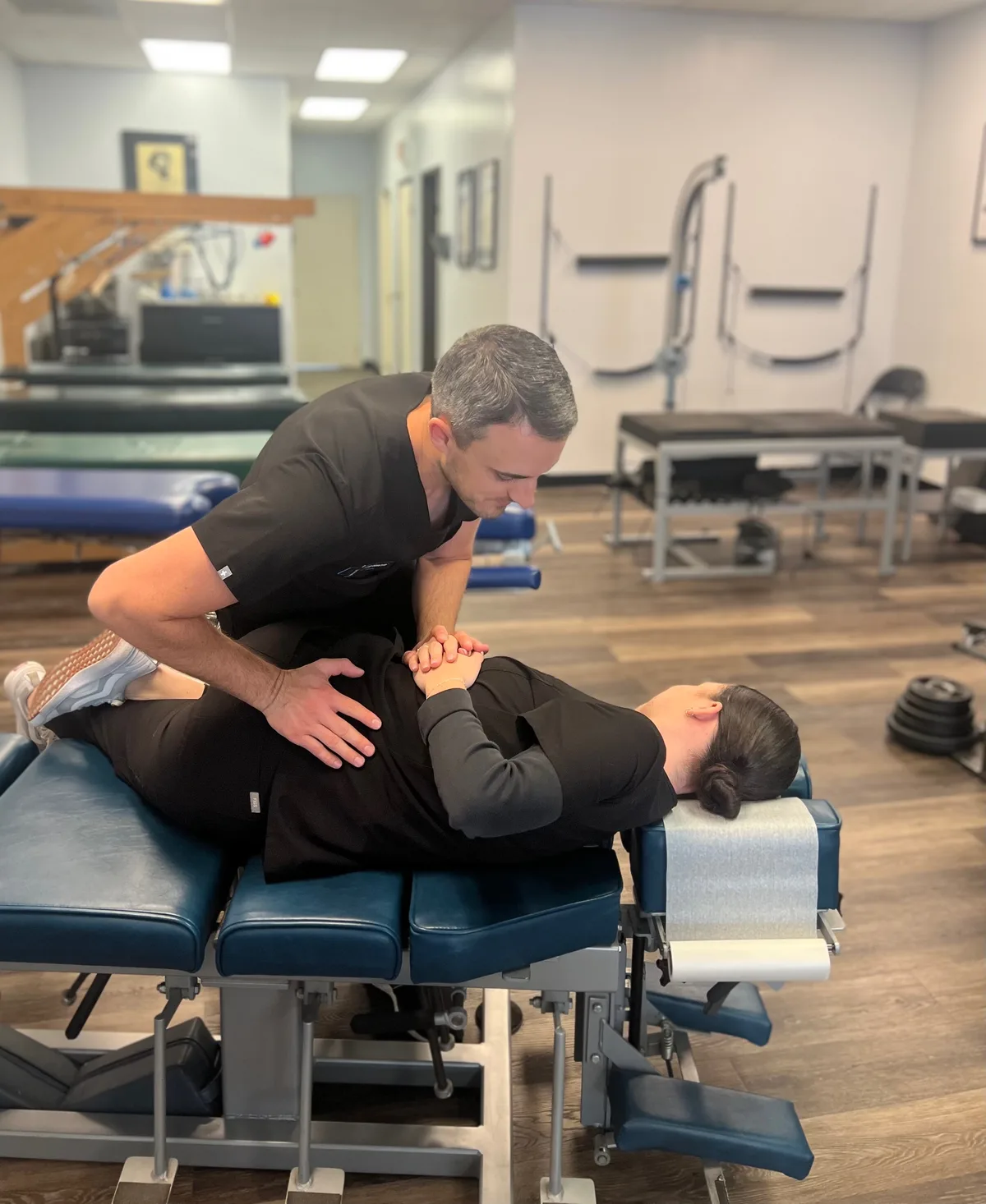
Here’s the distinction that matters most, and the one most offices skip. There’s a difference between the muscle that hurts and the structure underneath it. Tight, painful muscles are almost always reacting to something — a spine that isn’t sitting where it should, a curve that’s lost its shape, joints that aren’t moving evenly. You can relax the muscle and feel better for a few days. But if the structure underneath hasn’t changed, the muscle goes right back to guarding, and the pain comes back. That’s the single most common reason patients tell me “I’ve tried chiropractic before and it didn’t last.”
Dr. Nick Brock, DC is a CBP-trained structural chiropractor at 1625 E Thousand Oaks Blvd in Thousand Oaks, serving Westlake Village, Newbury Park, Oak Park, and Agoura Hills. My job is to figure out which of your back pain is muscular and reactive, and which is structural and driving the whole thing — then treat the right one.