$39 New Patient Special — consultation, exam & X-rays if needed. Call (805) 496-4469
Service

Scoliosis Management

CBP-based scoliosis care in Thousand Oaks that measures your curve, tracks it over time, and works to slow or reduce progression — with honest co-management when surgery or bracing is the better call.

Who this is for

  • Adults living with an existing scoliosis curve who want to manage pain and posture without surgery
  • Parents of an adolescent who just got a scoliosis diagnosis and want a measurement-first second opinion
  • Patients who've been told to 'watch and wait' and want active monitoring instead of waiting alone
  • People with a mild-to-moderate curve causing back or neck pain, uneven shoulders, or a rib hump

How it works

Scoliosis is a three-dimensional sideways-and-rotated curve of the spine. Some curves are mild and stable for life; others progress — especially during adolescent growth spurts. The single most important thing in scoliosis care is knowing your number and watching whether it’s changing. That’s where we start.

1. Measure. Your first visit includes a standing X-ray, a Cobb-angle measurement (the standard way scoliosis is quantified, in degrees), and digital posture analysis. We document shoulder height, pelvic level, and rotation. This is the baseline everything else is measured against.

2. Classify and plan. Curve size, location, and your stage of life change everything. A 12-degree curve in a 40-year-old with back pain is a different conversation than a 28-degree curve in a 13-year-old still growing. We’ll tell you which one you are, in plain language, and what the evidence says is reasonable to attempt.

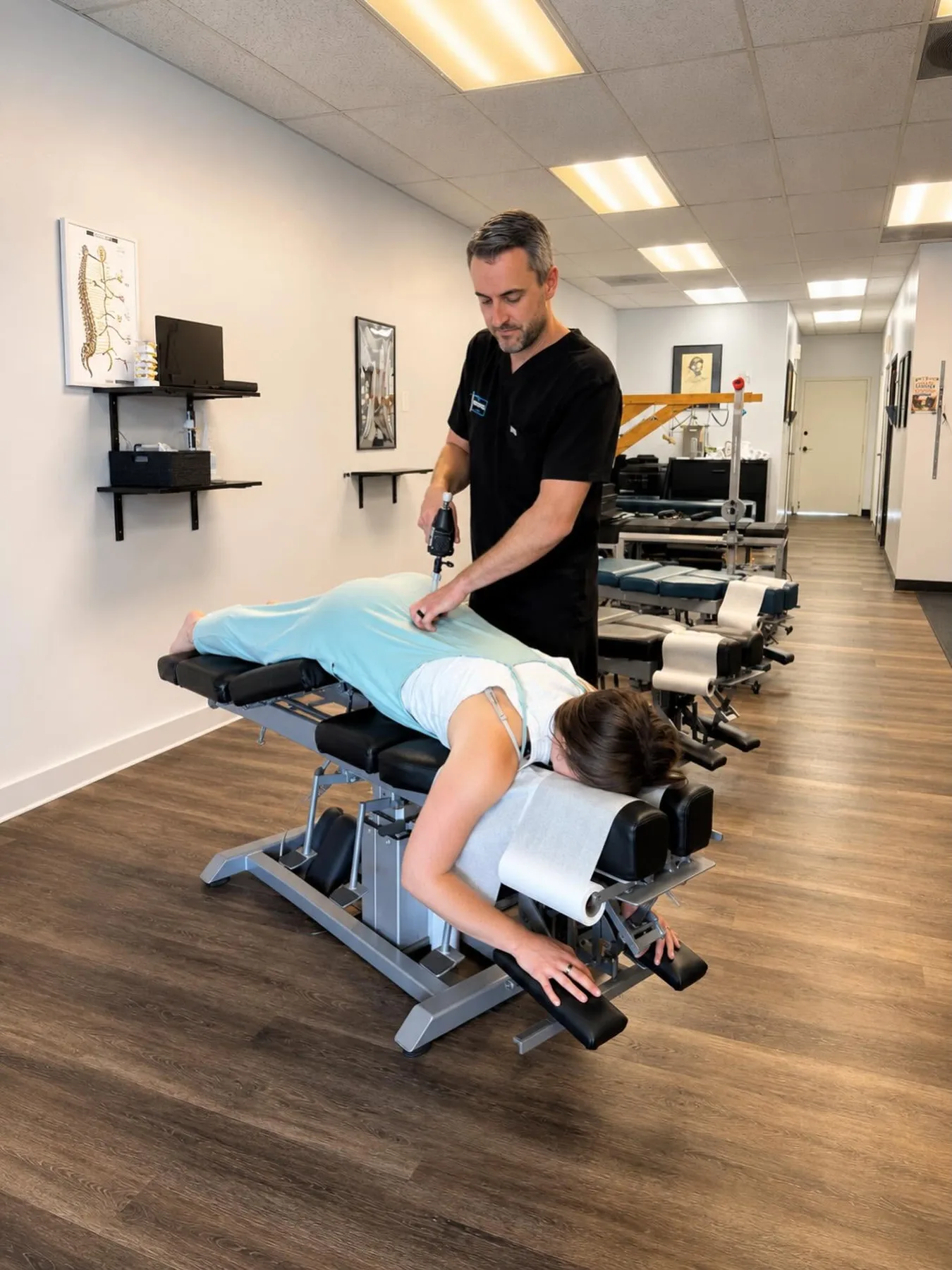
3. Correct what can be loaded. Chiropractic BioPhysics treats the spine as a structural unit. For scoliosis that means mirror-image work — adjustments, exercises, and traction set up in the opposite direction of your curve and rotation — plus Denneroll spine-remodeling to apply sustained, dose-able load over time. The aim is to influence the curve and improve posture and pain, monitored by re-measurement. We do not promise a straight spine.

4. Monitor. We re-image and re-measure at set intervals so we know whether the curve is holding, improving, or progressing. If it’s progressing past where conservative care belongs, that triggers a referral — not more of the same.
Benefits

We measure the curve, not just look at it

Standing X-ray with a Cobb-angle measurement and digital posture analysis (PostureRay). You see the actual number we're working with — and we re-measure to track it.

Care aimed at slowing or reducing progression

CBP mirror-image traction and Denneroll spine-remodeling load the spine in the opposite direction of the curve. The goal is to influence progression and posture — carefully, and tracked by measurement.

A real monitoring schedule

Scoliosis isn't a one-and-done. I set re-measurement intervals so we catch a worsening curve early instead of discovering it a year later.

Honest co-management

If your curve is large, rapidly progressing, or in a growing child who may need a brace or surgical consult, we refer you to an orthopedic scoliosis specialist — and we co-manage from there.

Frequently asked questions

Can a chiropractor fix scoliosis?

No one — chiropractor, orthopedist, or surgeon — can promise to “fix” or fully straighten scoliosis with conservative care, and we won’t tell you otherwise. What structural chiropractic can aim to do is slow or reduce curve progression, improve posture, and ease the pain a curve causes, all tracked by before-and-after Cobb-angle measurement. The honest goal is a measured, monitored curve and a more comfortable spine — not a cure.

Do you measure the curve, or just adjust?

We measure first, always. Your first visit includes a standing X-ray, a Cobb-angle measurement in degrees, and digital posture analysis (PostureRay). That’s your baseline. I re-measure at planned intervals so we can actually see whether the plan is working — adjusting without measuring is guessing.

My teenager was just diagnosed. Should we wait or do something?

Adolescent growth is exactly when curves can progress fastest, so “watch and wait” should mean active monitoring, not waiting alone. I’m glad to measure your child, give you a clear baseline, and tell you honestly whether conservative care is appropriate or whether the curve size and growth stage warrant an orthopedic scoliosis specialist for bracing or a surgical opinion. Often it’s both, working together.

When would you refer me to an orthopedist instead?

Large curves (generally past the moderate range), curves that are progressing quickly, and growing children who may need bracing or a surgical consult belong with an orthopedic scoliosis specialist. We refer in those cases and co-manage — conservative care for posture and comfort, the specialist for the structural decisions that are theirs to make. I’d rather send you to the right person than keep you where we can’t help.

Is scoliosis care covered by the $39 New Patient Special?

Yes — your first comprehensive visit, including consultation, exam, posture analysis, and X-rays if indicated, is covered by the $39 New Patient Special (a $140 value). The exception is auto-accident or personal-injury cases, which bill through insurance or your attorney. Ongoing scoliosis care is laid out in writing — cost, frequency, and a measurable end point — before any treatment begins.

Your solution to pain.

CBP-trained structural chiropractic care in Thousand Oaks. Book your first visit today — new patient special $39.

Call Book Directions