$39 New Patient Special — consultation, exam & X-rays if needed. Call (805) 496-4469
Shockwave therapy

Shockwave Therapy in Thousand Oaks

Also called acoustic wave therapy. A non-invasive treatment for stubborn tendon, joint and soft-tissue pain — no drugs, no needles, no surgery, no downtime, and no electrical shock despite the name.

Shockwave therapy — clinically extracorporeal shockwave therapy, or ESWT, and also called acoustic wave therapy — uses acoustic pressure waves delivered through the skin to restart the body's own repair process in tissue that has stopped healing. Despite the name there is no electrical shock and it is not muscle stimulation. No needles. No anesthetic. No medication. No recovery time. You walk in, spend ten to twenty minutes on the table, and walk straight back into your day.

It is built for the injuries that will not settle. A fresh strain calms down with rest. A tendon that has hurt for six months is a different problem — it has stalled in a degenerated state that rest and anti-inflammatories no longer move. Shockwave interrupts that stall mechanically, prompting new blood flow and a fresh repair response in the tissue itself. Because the work happens in the tissue rather than on the pain signal, the improvement tends to hold rather than wear off.

The equipment and protocol we use

We treat with GAINSWave for Recovery — the orthopedic and sports-injury protocol from the GAINSWave provider network. The network matters less for the brand on the door than for what sits behind it: a standardized protocol for how many pulses, at what intensity, over how many sessions, rather than technique that varies clinic to clinic.

The unit delivers its pulses at a high rate, which keeps sessions to ten to twenty minutes. Most people find it easier to sit through than they were expecting — uncomfortable over the sore spot, but not painful, and over quickly.

GAINSWave is more widely known for its men's health work. GAINSWave for Recovery is the musculoskeletal side of it, and it is the only thing this practice does with the device. We treat tendons, joints and soft tissue.

Shockwave is not new to the Conejo Valley, but it is almost entirely used here for men's health. As far as we know, this is the only practice in the area using it the way it is used in sports medicine: for tendon, joint and soft-tissue injury, alongside a full structural assessment.

What we treat with shockwave

If your pain has been there for months and has stopped responding to rest, this is the kind of problem shockwave was built for.

Achilles tendon pain

The stubborn runner's injury. One of the best-researched uses of shockwave, and one of the most rewarding to treat.

Shoulder pain and calcific tendinitis

Particularly effective where a calcium deposit has formed in the rotator cuff. Often the alternative to needling or surgery.

Tennis elbow and golfer's elbow

Tendon pain at the elbow that has dragged on for months despite rest, braces and rehab.

Plantar fasciitis and heel pain

That sharp first-step pain in the morning. One of the most common reasons people come to us for shockwave.

Knee pain — jumper's knee and arthritic joints

Patellar tendon pain, and the soft-tissue component of wear-and-tear knee pain.

Hip pain

The tendons and soft tissue around the hip, where pain persists long after rest should have helped.

Chronic neck, back and shin pain

Muscular and myofascial pain — the tight, knotted tissue that has not let go for months.

Old muscle strains that never fully healed

Scarred, knotted tissue left behind long after the original injury.

Is shockwave right for your problem?

Shockwave is built for chronic problems — tissue that has hurt for months and stopped improving on its own. A fresh strain usually settles with time and sensible loading, and does not need this. Pain coming from a disc or a nerve root is a different problem with different answers, and because a full examination and X-rays are part of your first visit, we will know which one you have before we recommend anything.

What a course actually involves

Despite the name, there is no electrical shock involved and nothing to do with muscle stimulation. A "shockwave" here is a pressure wave traveling through tissue — the same physics as sound, which is why the treatment is also called acoustic wave therapy. No current passes through you. What you feel is a rapid mechanical tapping against the skin, firmest directly over the sore spot.

A single session

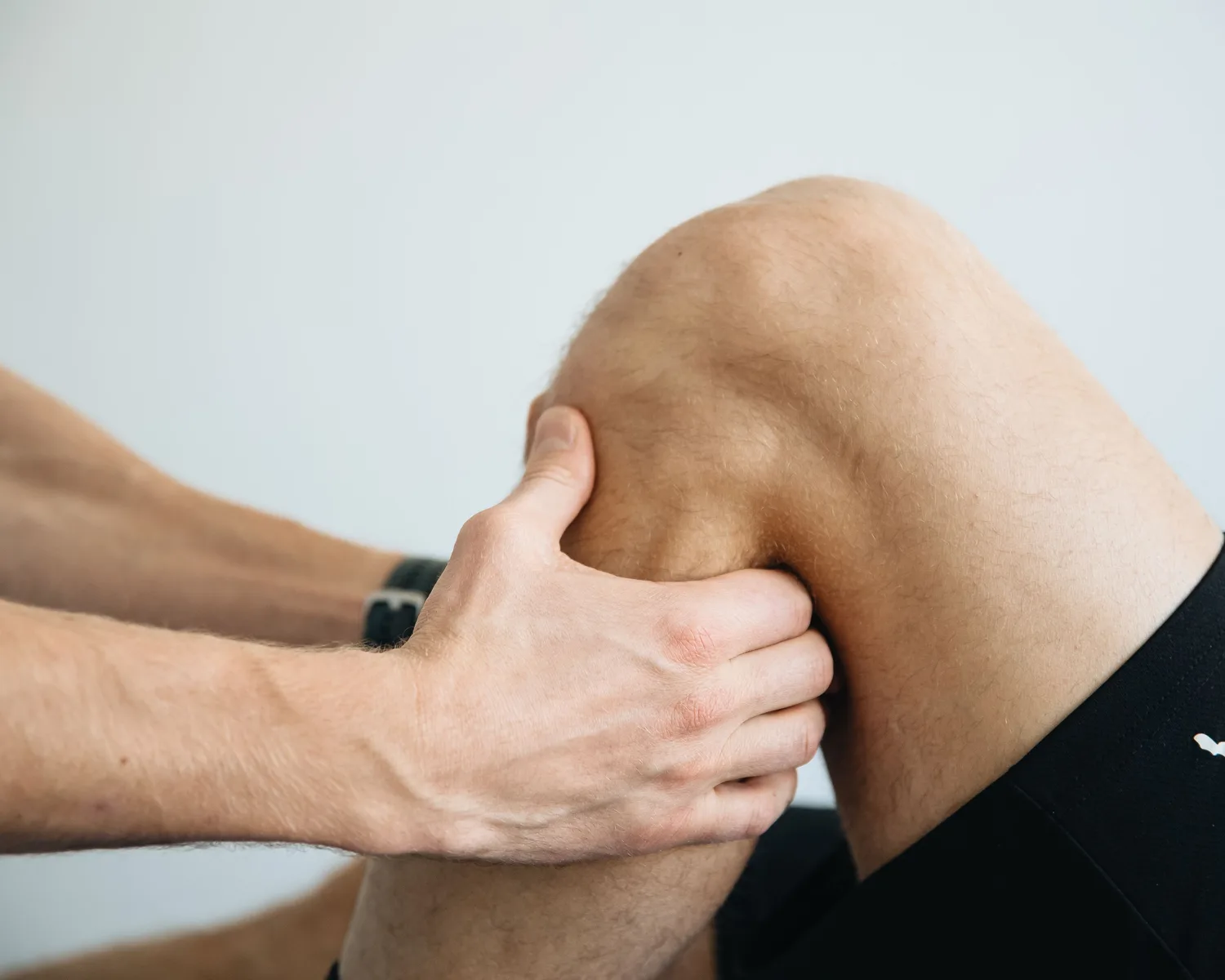
10 to 20 minutes. Gel goes on, a handheld applicator moves over the area delivering rapid pulses. Most people describe a firm tapping that is strongest over the sorest spot. The intensity is set to what you can tolerate.

A full course

Usually 3 to 6 sessions, about a week apart. The tissue response builds across the course rather than arriving at once. Many people notice a change partway through.

Afterwards

None. You walk out and back into your day. No needles, no anesthesia, no medication. The area may be sore, slightly red or a little swollen for a day or two — that is the expected response. We usually suggest easing off high-impact training briefly.

Safety and who it suits

Shockwave has a strong safety record across millions of treatments, and side effects are mild and short-lived — usually a day or two of tenderness in the treated area. As with any treatment there are situations where we would not use it, and we review your history before starting. We would hold off if any of these apply:

  • An active infection in or over the area to be treated.
  • A known blood clot in the area, or a clotting disorder without clearance from your physician.
  • Over or near a known or suspected tumor.
  • Over an open growth plate — which rules out anyone still growing, generally under 18.
  • Pregnancy, where the treatment area is anywhere near the abdomen or lower back.
  • A tendon that is close to fully torn. That needs imaging and an orthopedic opinion first, not shockwave.
  • Significantly reduced bone density in the treatment area, until it has been assessed.

If you are on blood thinners, that is not automatically a no — but it does need clearing with the physician managing them first.

What it costs

Every course is built around the specific problem, so the cost depends on how many sessions you need and what we are treating. There is no single price we can put on a page and have it be true for everyone.

What we can do is give you the full figure up front. After the examination you get the total for your course in writing — not a per-session number that leaves you guessing at the end. Call the office on (805) 496-4469 and we will talk you through it.

Common questions

What does shockwave therapy actually do?

It delivers rapid acoustic pressure waves into the tissue through the skin. Cells convert that mechanical force into a biological signal — mechanotransduction — which prompts new small blood vessels to form, releases growth factors, and can begin breaking down calcium deposits in a calcified tendon. The intent is to restart a repair process the body left unfinished, rather than to block a pain signal.

Will I be electrically shocked? Is this like muscle stim or a TENS unit?

No to all three, and it is the most common thing people ask. There is no electrical current involved at any point. The device delivers mechanical pressure waves — sound energy — into the tissue through a handheld applicator. Muscle stim and TENS pass a current through you to make muscles contract or to mask a pain signal; this does neither. It works on the tissue itself.

Why do I see this called acoustic wave therapy, or GAINSWave?

They are the same treatment. "Shockwave therapy" is the clinical term and the one most people search for. "Acoustic wave therapy" and "acoustic sound wave therapy" describe the same pressure waves more literally — and more accurately, since nothing is being shocked. GAINSWave for Recovery is the provider network and treatment protocol we use. If you have been researching any of those names, you are in the right place.

Does it hurt?

Most people describe a firm, rapid tapping that gets noticeably more intense directly over the sore spot. It is uncomfortable rather than painful, and the intensity is turned up or down to what you can tolerate. Nothing is injected and no anesthetic is used.

How many sessions will I need?

A typical course is three to six sessions, about a week apart, each lasting ten to twenty minutes. The tissue response builds over the course rather than arriving all at once, which is why a single session is rarely the plan. Many people notice a change partway through.

Is there any downtime?

No. You walk out and carry on with your day. The treated area can feel sore, slightly red or a little swollen for a day or two afterwards, which is the expected response rather than a setback. We usually suggest easing off high-impact training for a short window while the tissue responds.

Does insurance cover shockwave therapy?

Usually not — most insurers still treat shockwave as elective, so it is typically paid out of pocket. Call us and we will quote you the full course up front, not just a per-session figure, so you know the total before you decide. Plenty of people find it worth it precisely because it is the alternative to injections or surgery.

Is it FDA cleared?

Yes. Focused shockwave devices have been FDA cleared since 2002 and radial devices since 2007, and the technology has been used worldwide for decades. It has a strong safety record across millions of treatments, with side effects that are mild and short-lived.

How is this different from the GAINSWave advertised for men's health?

Same underlying technology, different application and a different protocol. GAINSWave is best known for men's sexual health. What we offer is GAINSWave for Recovery, its musculoskeletal protocol, and it is the only thing we do with the device — tendon, joint and soft-tissue pain. We do not treat sexual health conditions, and that use of the technology is outside a chiropractor's scope of practice in California.

How do I know if I am a good candidate?

The short answer: chronic tendon, joint or soft-tissue pain that has been there for months and has not responded to rest, stretching or rehab. That is exactly what shockwave is designed for. Come in for an examination — we will look at the tissue, take X-rays if they will tell us something useful, and give you a straight answer on whether this is the right treatment for what you have and what to expect from a course.
Where we are, and who travels in

Dr. Nick Brock, DC practices at in Thousand Oaks, just off the 101. Mon, Wed, Thu 8:00–5:30 · Tue 2:00–5:30 · Closed Fri–Sun

Patients come in from across the Conejo Valley — Westlake Village and Newbury Park are about ten minutes out, Oak Park and Agoura Hills around fifteen, and Calabasas is the farthest at roughly twenty-five minutes eastbound. That distance is worth thinking about here in a way it is not for a single adjustment: a shockwave course is three to six visits about a week apart, so it is a drive you make repeatedly rather than once.

If you have been told your options are injections, surgery or living with it, this is worth a conversation first.

The first step is an examination — a proper look at the tissue, X-rays where they will tell us something useful, and a clear plan with a realistic timeframe before anything begins. Call the office and we will get you in.

Your solution to pain.

CBP-trained structural chiropractic care in Thousand Oaks. Book your first visit today — new patient special $39.

Call Book Directions