Shockwave therapy
Shockwave Therapy for Plantar Fasciitis
For that sharp first-step heel pain that has not gone away on its own.
For that sharp first-step heel pain that has not gone away on its own.
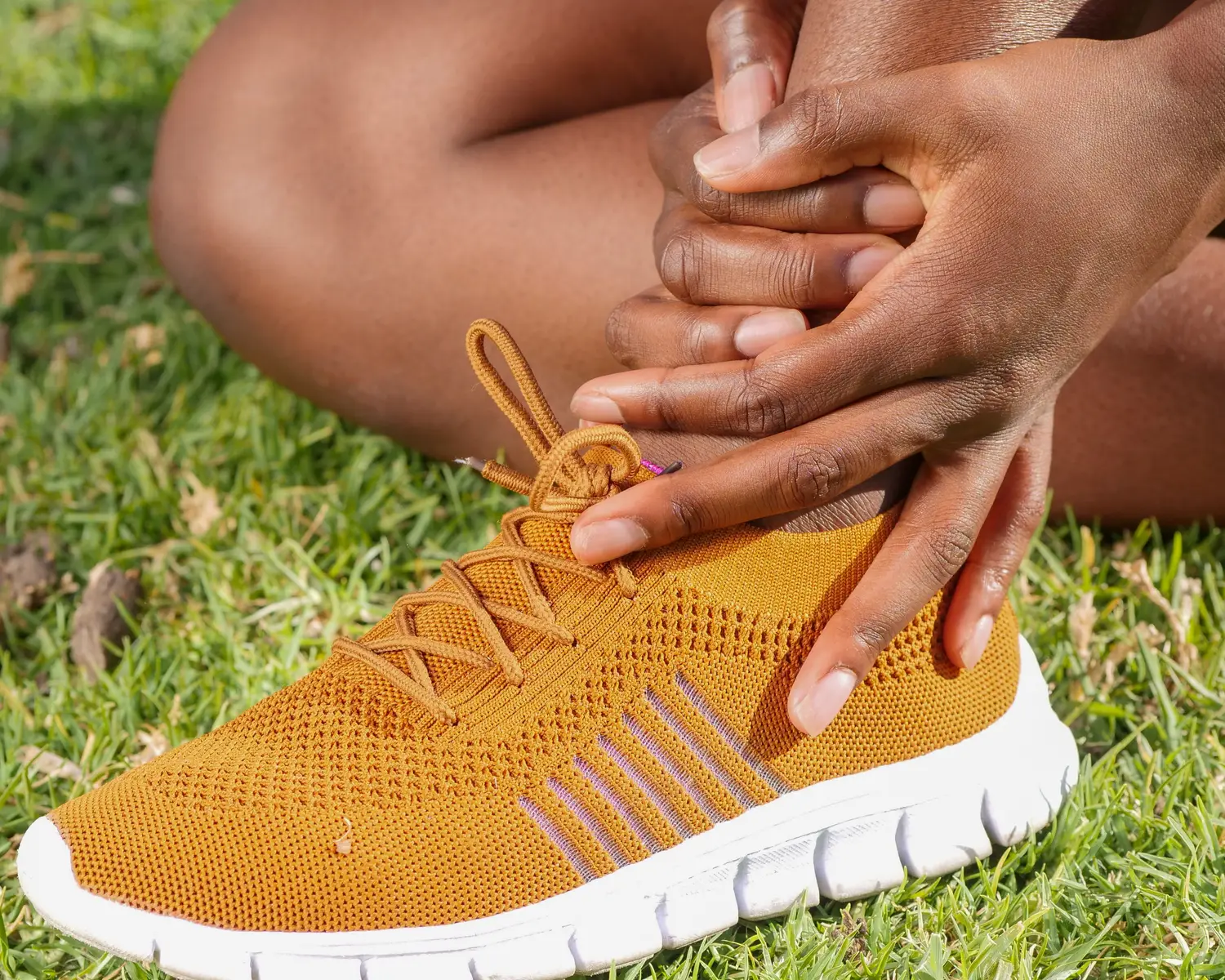
Plantar fasciitis is pain along the plantar fascia, the thick band running from the heel to the toes. The signature is that first step out of bed in the morning — a sharp, stabbing heel pain that eases after a few minutes of walking and returns after sitting. When it lasts beyond a few months the tissue is degenerated rather than inflamed, and the usual anti-inflammatory approaches stop helping.
Plantar fasciitis is the most-studied application of shockwave therapy anywhere in the literature. A 2017 meta-analysis of randomized controlled trials concluded that ESWT is effective for chronic plantar fasciitis, and it remains one of the most common reasons people seek shockwave out. It is aimed squarely at the chronic cases — heel pain that has persisted well past the point where rest and stretching should have worked.
Worth knowing. Heel pain has more than one cause, and not all of it is the plantar fascia. The examination establishes what is actually driving yours, so your course targets the right tissue rather than the obvious one.
Shockwave gets the tissue repairing; the rest of the plan keeps it that way. Calf and fascia loading, footwear, and how you load the foot when you walk all matter, and we build those into your care rather than treating the heel in isolation.
← Back to shockwave therapy: everything it treats, and what a course involves
Despite the name, there is no electrical shock involved and nothing to do with muscle stimulation. A "shockwave" here is a pressure wave traveling through tissue — the same physics as sound, which is why the treatment is also called acoustic wave therapy. No current passes through you. What you feel is a rapid mechanical tapping against the skin, firmest directly over the sore spot.
10 to 20 minutes. Gel goes on, a handheld applicator moves over the area delivering rapid pulses. Most people describe a firm tapping that is strongest over the sorest spot. The intensity is set to what you can tolerate.
Usually 3 to 6 sessions, about a week apart. The tissue response builds across the course rather than arriving at once. Many people notice a change partway through.
None. You walk out and back into your day. No needles, no anesthesia, no medication. The area may be sore, slightly red or a little swollen for a day or two — that is the expected response. We usually suggest easing off high-impact training briefly.
Shockwave has a strong safety record across millions of treatments, and side effects are mild and short-lived — usually a day or two of tenderness in the treated area. As with any treatment there are situations where we would not use it, and we review your history before starting. We would hold off if any of these apply:
Every course is built around the specific problem, so the cost depends on how many sessions you need and what we are treating. There is no single price we can put on a page and have it be true for everyone.
What we can do is give you the full figure up front. After the examination you get the total for your course in writing — not a per-session number that leaves you guessing at the end. Call the office on (805) 496-4469 and we will talk you through it.
Dr. Nick Brock, DC practices at in Thousand Oaks, just off the 101. Mon, Wed, Thu 8:00–5:30 · Tue 7:00–11:30 · Closed Fri–Sun
Patients come in from across the Conejo Valley — Westlake Village and Newbury Park are about ten minutes out, Oak Park and Agoura Hills around fifteen, and Calabasas is the farthest at roughly twenty-five minutes eastbound. That distance is worth thinking about here in a way it is not for a single adjustment: a shockwave course is three to six visits about a week apart, so it is a drive you make repeatedly rather than once.
If you have been told your options are injections, surgery or living with it, this is worth a conversation first.
The first step is an examination — a proper look at the tissue, X-rays where they will tell us something useful, and a clear plan with a realistic timeframe before anything begins. Call the office and we will get you in.
How can we help?
Advanced Chiropractic Rehabilitation · Thousand Oaks
Mon, Wed, Thu 8:00–5:30 · Tue 7:00–11:30 · Closed Fri–Sun